Thanks for your interest!
Register to download the file or log in with your credentials.
Login

One or more fields have an error. Please check and try again.

Register

I have read the privacy policy and consent to the processing of personal data based on the provisions of EU Regulation 2016/679*

One or more fields have an error. Please check and try again.

ESG
Sustainability Report 2024

We continue to embed sustainability into our strategy, combining technological innovation, responsible governance, and a people-centric culture to create long-term value. Explore our commitments, results, and future priorities in the Servotecnica Sustainability Report 2024.

Bilancio sostenibilità
previous arrow
next arrow
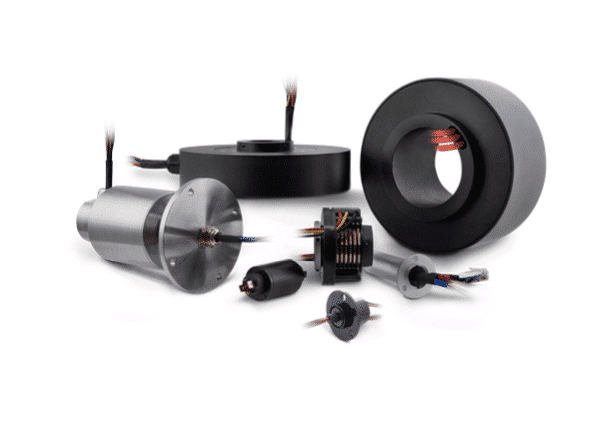
Slip Rings
Slip Rings
Find out more
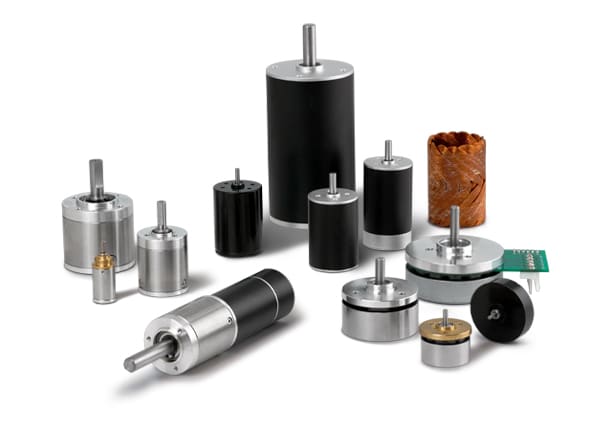
Coreless Micromotors
Find out more
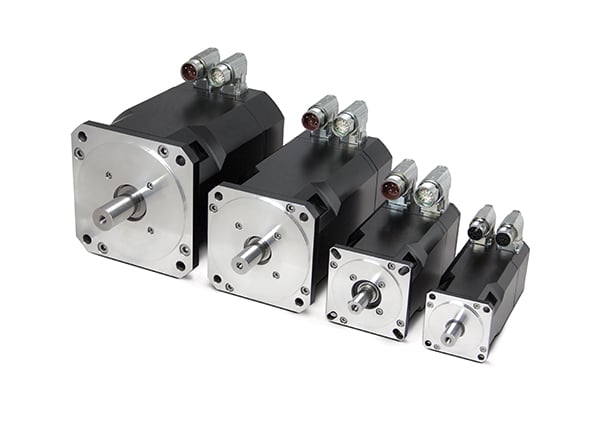
Servomotors
Servomotors
Find out more
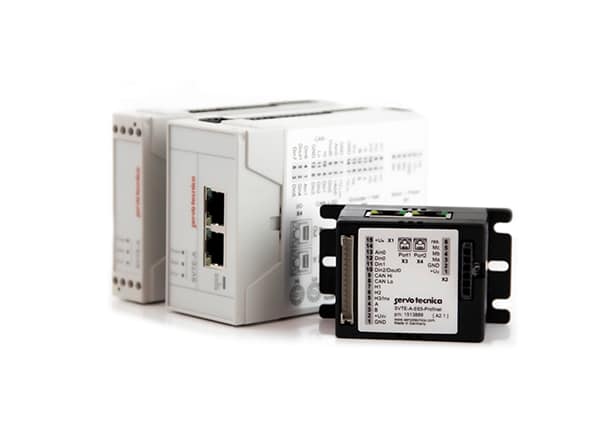
Servo Drives
Servo Drives
Find out more
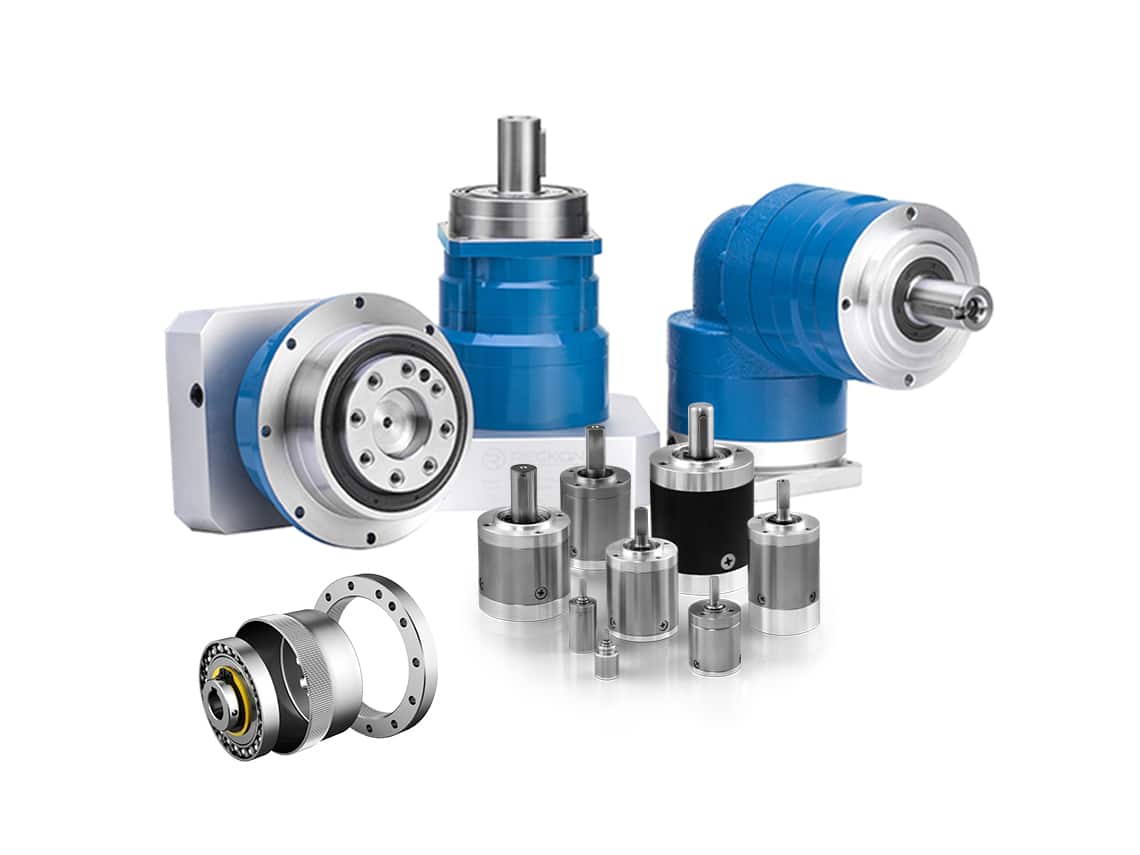
Precision gearboxes
Precision gearboxes
Find out more

Mechatronic projects

With over 40 years of experience in industrial automation, Servotecnica is one of the world’s leading suppliers of customized mechatronic solutions and electromechanical components for a variety of industries. Our strength lies in combining innovative technologies with the experience and expertise of our engineers.

Go to projects

45 years of experience

Our motion specialists are here to help you choose the best solution for your application. Discover Servotecnica’s added value on design, logistics, quality and more.

Find out more

Blog News

View all News
Q: Massimo, thank you for joining us. To start, could you describe your background and what you do at Servotecnica today? A: I joined Servotecnica in 2001 as an electrical engineer and began in the technical department working on drive programming and control electronics for motion axes. That early phase gave me a strong grounding in how real machines behave, not just how they are supposed to behave on paper. Over time, I also gained experience working closely with customers on the commercial and application side. That combination turned out to be extremely valuable because it helped me translate real operating constraints into engineering decisions that actually work long term in the field. In recent years I returned fully to a technical leadership role as Technical Director. I have been deeply involved in reorganising the technical department, developing a stronger research and development structure, and improving how we support customers on complex, mission critical applications. In medical systems especially, there is no tolerance for surprises, so engineering discipline and validation become just as important as performance. Q: When you look at medical applications, what mindset do you bring as Technical Director? A: I approach medical projects as full systems rather than individual components. A slip ring is never just something that passes current from one side to the other. It sits at the intersection of mechanics, electronics, data integrity, and long term reliability. In surgical robots and advanced diagnostic machines, the slip ring often becomes the single pathway through which all power, signals, and high speed data must pass across rotating joints. If something degrades there, it shows up immediately at the system level. Because of that, the mindset is not about chasing maximum catalogue specifications. It is about designing stable behaviour over time. That means predictable electrical contact performance, consistent torque, controlled wear, clean signal transmission, and a test strategy that matches the customer’s risk profile and regulatory expectations. Q: Sterilisation and cleaning often come up in medical design. How does that affect slip ring engineering in practice? A: The first step is understanding what the device will realistically be exposed to throughout its life. Some systems involve high temperature sterilisation cycles, others involve chemical disinfection, and many involve frequent cleaning with aggressive agents. Each of these environments has different effects on metals, polymers, seals, and lubricants. Even when the slip ring is not directly sterilised, the device architecture must still consider moisture ingress, chemical exposure, and long term material compatibility. From an engineering perspective, this becomes a combination of material selection, sealing strategy, and realistic life testing. It is far better to design for the actual environment from the start than to assume the enclosure will solve everything. Q: When a customer asks for “the perfect medical slip ring,” where do you begin? A: We always start with a structured requirements discussion. Medical projects often hide constraints that are not obvious at first, such as data sensitivity, cleaning exposure, torque limits, or regulatory documentation needs. Once those are clear, the design naturally focuses on five core areas: contact technology and materials, electrical architecture, mechanical behaviour, environmental protection, and manufacturability. All of these interact. A small change in connector type or channel count can influence sealing, EMC performance, torque, and even assembly methods. That is why early collaboration is so important. Q: What role do materials and contact systems play in medical reliability? A: They are central. For sensitive signals and long service life, the contact system must minimise electrical noise and wear. Precious metal contact technologies, multi fibre brush systems, and carefully controlled surface finishes are often used to achieve this. Wear behaviour matters not just for lifetime but also for stability. Performance drift, debris generation, or intermittent contact are unacceptable in medical platforms designed for continuous operation over many years. By optimising contact geometry and material pairing, it is possible to achieve extremely smooth electrical behaviour while extending operational life significantly compared with older brush technologies. Q: Signal integrity seems increasingly important in modern medical devices. How do you protect it across a rotating interface? A: The key is to treat the slip ring as a mixed signal system rather than a collection of independent circuits. Power channels, analogue sensing lines, digital control signals, and high speed data must be laid out intentionally. Shielding, grounding strategy, and physical separation are designed into the internal architecture from the beginning. The goal is to make the slip ring behave as closely as possible to a high quality cable, while actively minimising the disturbances introduced by moving electrical contacts. Q: Medical customers often need custom solutions. How do you keep those manufacturable? A: We rely on modular design built on a wide base of proven standard architectures. Rather than designing from scratch every time, we adapt existing platforms by modifying channel count, materials, connectors, sealing, and layout. This keeps quality consistent while allowing high levels of customisation. In medical projects, even small changes can cascade into multiple engineering areas, so controlled customisation with strong testing discipline is essential. Q: Could you share an example of a medical slip ring project and what made it successful? A: One good example came from a customer developing precision equipment for histological analysis, where tissue samples must be heated and stabilised before microscopic examination. The temperature control in this process is critical, as even small fluctuations can affect the quality of the analysis. The main challenge was space. The device design left very little room for additional components, but it still required reliable transmission of both power for the heating elements and signal lines for temperature sensors. We developed a custom solution using ultra flat pancake style slip rings designed specifically for compact assemblies. Two units were integrated into the system, each with four channels, two for power and two for signal transmission, with current capacity suitable for the heating process. Despite their very low profile, the slip rings delivered stable electrical performance and allowed precise temperature control throughout operation. Just as importantly, the solution supported full testing and traceability, which is essential in medical equipment. The ultra flat design fit seamlessly into the device while providing long term reliability, enabling the customer to maintain consistent performance without increasing the size or complexity of the system.
Motion blog
Q: Massimo, thank you for joining us. To start, could you describe your background and what you do at Servotecnica today? A: I joined...
Find out more
Servotecnica Advances Slip Ring Engineering Capabilities for Extreme Environments
Motion blog
Servotecnica,  a global leader in motion control technology, has expanded its slip ring engineering capabilities to better support a...
Find out more
Servotecnica Slip Ring Spotlights: Lifetime and Wear with Matteo Bonvicino
Motion blog
Welcome back to Servotecnica Slip Ring Spotlights, our interview series offering a behind-the-scenes look at those driving innovation...
Find out more

Tell us more about your application

Contacts us