Ticketing

 Market:
Worldwide


Unano Series
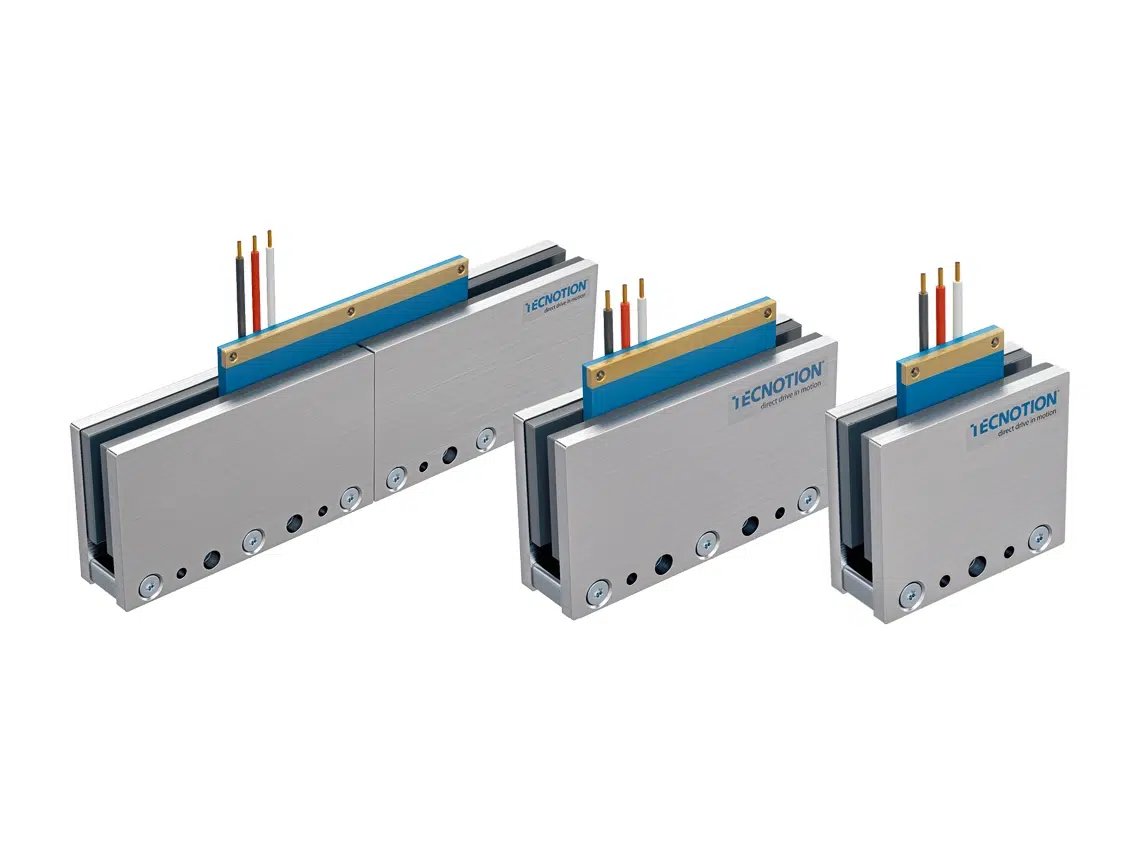
Maximum precision, minimal footprint. The Unano series linear motors combine high performance, direct drive control, and zero wear in an ultra-compact format. Designed for seamless integration into applications where space is limited but reliability is non-negotiable, they provide a smart, clean alternative to piezo and spindle solutions.
Technical Specifications
- Peak force: 5.1 to 15.3 N
- Continuous force: 2.6 to 7.8 N
- Available motors: UnanoA3, UnanoA6, UnanoA9
- Available magnets: UnanoA34-51
Attributes
Ironless
Low voltage


Unano Series
Maximum precision, minimal footprint. The Unano series linear motors combine high performance, direct drive control, and zero wear in an ultra-compact format. Designed for seamless integration into applications where space is limited but reliability is non-negotiable, they provide a smart, clean alternative to piezo and spindle solutions.
Attributes
Ironless
Low voltage
Technical Specifications
- Peak force: 5.1 to 15.3 N
- Continuous force: 2.6 to 7.8 N
- Available motors: UnanoA3, UnanoA6, UnanoA9
- Available magnets: UnanoA34-51
FAQ
Ironless motors do not have a force constant saturation point. In this case, peak force is determined by the maximum allowable thermal expansion of the winding material. For these motors, the temperature rise is 20 K/s.
The motor constant represents the ratio between the force generated (expressed in Newtons) and the power dissipated as heat (expressed in Watts), and is indicated in N²/W. A higher constant value indicates that the motor generates the same force while dissipating less heat, making it more thermally efficient. The constant value decreases as winding temperature increases, due to the rise in phase-to-phase electrical resistance (Rph-ph).
Formula: S = K² / (3 × Rph-ph)
Permanent magnets exert an attractive force on all ferromagnetic materials. In iron core linear motors, this characteristic generates the so-called cogging effect. The iron core tends to settle into certain preferential positions relative to the magnets. To maintain motion, the motor must therefore continuously vary its thrust force to overcome these positions. The result is a less smooth motion compared to that of an ironless linear motor, which has no iron core and is therefore not affected by this phenomenon.
Thanks to their zero cogging and lightweight forcer, ironless linear motors are particularly suited to highly dynamic applications such as laser cutting machines, small printing machines, pick-and-place machines, and semiconductor test and measurement machines.
Ironless linear motors have a primary part with no lamination stack and self-supporting windings. Without a ferromagnetic core, there is no flux saturation, which enables very high peak forces. In addition, the moving part is lightweight, resulting in a high force-to-mass ratio and very high accelerations. Zero cogging ensures smooth motion and constant velocity without disturbances. As a result, ironless motors are particularly suited to applications requiring high dynamics and highly uniform motion.
Request information