Ticketing

 Market:
Worldwide


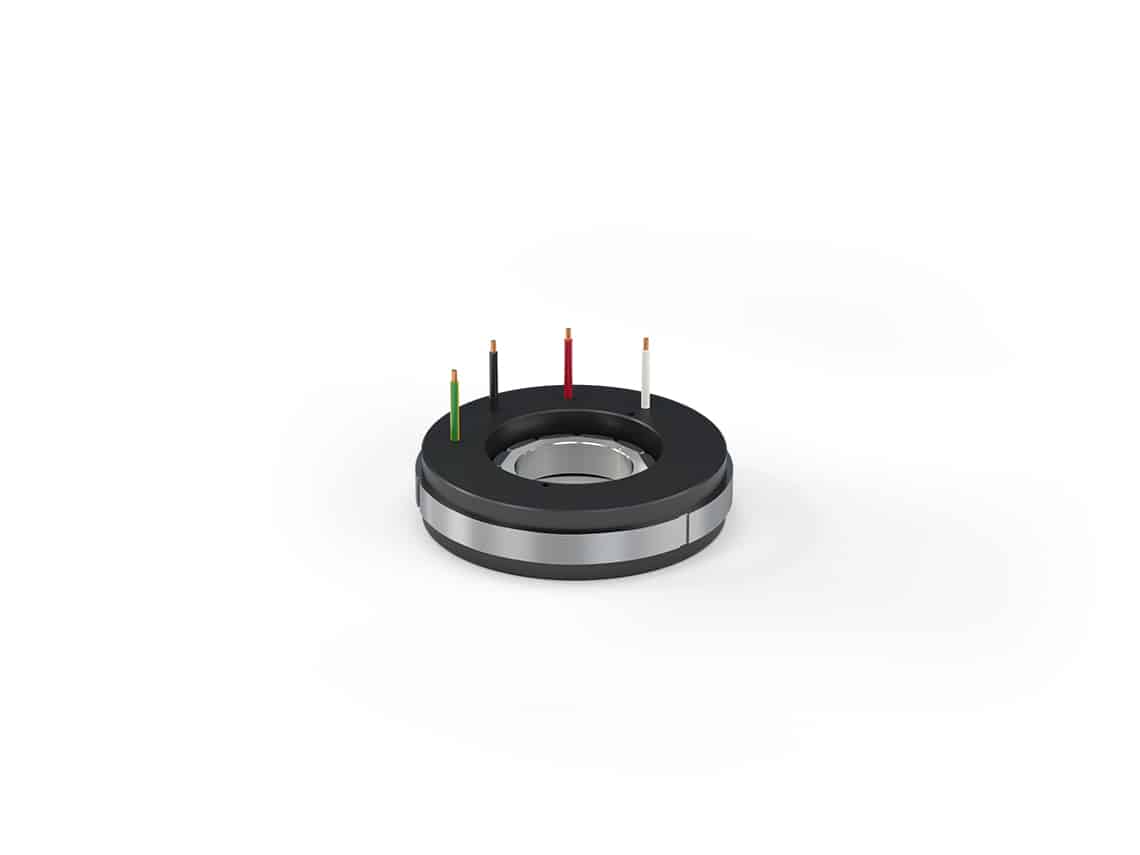
QTR 78 Series
As with the 65 series motor, the QTR 78 motor is optimized for low-voltage applications with small construction dimensions. Ideal for semiconductors and robotics.
More info at tecnotion.com
Technical Specifications
- Peak torque: 1.22 to 10.85Nm
- Continuous torque: 0.57- 4.41Nm
- Heights: 78-17 / 78-25 / 78-34 / 78-60
Attributes
Download
 Brochure_Frameless_Torque_2.3


QTR 78 Series
As with the 65 series motor, the QTR 78 motor is optimized for low-voltage applications with small construction dimensions. Ideal for semiconductors and robotics.
More info at tecnotion.com
Attributes
Technical Specifications
- Peak torque: 1.22 to 10.85Nm
- Continuous torque: 0.57- 4.41Nm
- Heights: 78-17 / 78-25 / 78-34 / 78-60
Download
FAQ
It is the torque the motor can generate beyond the saturation point, in the non-linear region of the motor’s torque constant. In this condition, the effective value of the torque constant is 26% lower than the catalog value. This parameter applies only to torque motors. Since the efficiency of current-to-torque conversion decreases, the windings heat up more quickly. At ultimate torque, the temperature rise is 10 K/s or 20 K/s, depending on the motor series.
In iron core motors, peak torque is the torque generated immediately beyond the saturation point of the motor’s torque constant. In this condition, the effective value of the torque constant is 14% lower than the catalog value. The windings heat up at a rate of 6 or 20 K/s, depending on the motor series. Ironless motors, on the other hand, do not have a torque constant saturation point. In this case, peak torque is determined by the maximum allowable thermal expansion of the winding material. For these motors, the temperature rise is 20 K/s.
The motor constant is the ratio of torque generated (in newton-meters) to power dissipated as heat (in Watts), expressed in Nm²/W. A higher constant value indicates that the motor generates the same torque while dissipating less heat, making it more thermally efficient. The constant value decreases as winding temperature increases, due to the rise in phase-to-phase electrical resistance (Rph-ph).
Formula: S = K² / (3 × Rph-ph)
Request information